
Eighteen Arts and Sciences professors were honored with 2026 Dean of Faculty Awards for their achievements in teaching, mentoring, research, and service to Dartmouth at a reception hosted by the Office of the Dean of the Faculty on Oct. 14
“The associate deans and I are thrilled to have the opportunity to shine a light on the work of our faculty,” says interim Dean of the Faculty John Carey. “These awards recognize exceptional teaching, scholarly and creative work, and service.”
Two of this year’s honorees, professors James Feyrer and Erich Osterberg, helped lead the Faculty of Arts and Sciences through its move into the new School of Arts and Sciences. They co-chaired the committee that revised Dartmouth’s governance rules as the school took shape.
“Dartmouth’s faculty owe an enormous debt of gratitude to Jim Feyrer and Erich Osterberg for their leadership during the creation of the new school,” Carey says. “This transition required a major rethinking of Dartmouth’s faculty governance system, which Jim and Erich led with great wisdom and care.”
“I am delighted to celebrate these remarkable faculty, who represent our breadth of excellence across disciplines and exemplify Dartmouth’s teacher-scholar model," says inaugural Dean of the School of Arts and Sciences Nina Pavcnik. “I also echo John in expressing my immense gratitude to Jim and Erich for their dedicated leadership. The inclusive, iterative process they led is a model for how faculty governance should work. I look forward to building on their work as our school continues to establish itself.”
The following awards were presented.
Ralph J. and Sheila Q. Maffei Faculty Fellowship Awards
Awarded to newly tenured and promoted faculty who have demonstrated excellence in their teaching and scholarship

Jeffrey Friedman, Professor of Government
Friedman is a political scientist who studies international security, foreign policy decision-making, and public opinion. His book The Commander-in-Chief Test draws on decades of polling, survey experiments, and historical cases to examine how presidents are judged on foreign policy. His first book, War and Chance, won the 2020 Peter Katzenstein Book Prize for an outstanding first book. He hosts the podcast of the journal International Security and directs the Rosenwald Postdoctoral Fellows Program at Dartmouth’s Davidson Institute for Global Security.
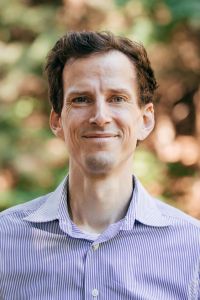
Paul Novosad, Professor of Economics
Novosad is an economist who uses digital data to study policy questions across the Global South. Drawing on satellite imagery, government and app data, and legal and historical texts read by large language models, he asks how well courts deliver justice and who gets access to economic opportunity. His team builds public data platforms, including a new one for research on cities in low- and middle-income countries, and more than 30 undergraduates have worked in his lab. He is part of the inaugural cohort of OpenAI’s Economic Research Exchange, which funds independent research on how AI is changing the global economy.

David Petruccelli, Associate Professor of History
Petruccelli teaches and writes about modern European and international history. His 2025 book A Scourge of Humanity traces how Interpol grew out of efforts to fight crime across borders between the two world wars, built on archival research in several languages. A former fellow of the Institute for Human Sciences in Vienna, he has published in journals including Contemporary European History and the Journal of World History. His next book follows the rise and fall of the global campaign to ban pornography in the 20th century.
James Wright Sustaining Faculty Excellence Awards
Awarded to newly tenured and promoted faculty who have made significant contributions as teacher scholars

Hsien-Chih Chang, Associate Professor of Computer Science
Chang is a theoretical computer scientist who studies the shapes behind computation, both the familiar ones like networks and maps and the hidden ones that turn up in unrelated problems. He uses abstract math to prove how efficiently those problems can be solved. His results have appeared at the ACM Symposium on Theory of Computing, a top venue in the field, including a method for compressing a sprawling network into a compact “sketch” that keeps the distances inside it intact. He holds an NSF CAREER award, and both graduate and undergraduate students have co-authored his papers.

Ash Fure, Professor of Sonic Arts
Fure is a composer whose work moves between music, art installation, and spatial design, often building new instruments and using architecture so that audiences become participants in the piece. The New York Philharmonic, the International Contemporary Ensemble, and the BBC Scottish Symphony have performed Fure’s compositions across the U.S. and Europe, and in 2021 the Los Angeles opera company The Industry named Fure co-artistic director. A Pulitzer Prize finalist, Fure has also won a Guggenheim Fellowship, the Rome Prize, and a Creative Capital Award. Fure directs Dartmouth’s MFA in Sonic Practice program.
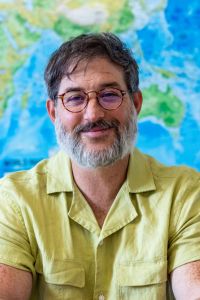
Justin Mankin, Professor of Geography
Mankin is a climate scientist and earth-system geographer who connects the physical drivers of climate change to their human costs, from lost harvests to conflict to the economic damage that can be traced to the largest carbon emitters. His research pairs observations with climate models and econometrics, and it appears regularly in leading journals. In 2024 he received the American Geophysical Union’s Global Environmental Change Early Career Award, and his funded projects have brought more than $2 million to Dartmouth. He testifies before the public and lawmakers and contributes to NASA, NOAA, and National Academies assessments on drought and the water cycle.
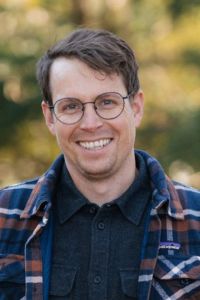
Jonathan Phillips, Associate Professor of Cognitive Science
Phillips studies how the mind handles possibilities: which options occur to us when we decide, how we judge what other people know, and how imagining what could happen shapes our language and our moral judgments. His work sits where psychology, philosophy, and linguistics meet, with related interests in theory of mind and happiness. His honors include the Stanton Prize from the Society for Philosophy and Psychology, a Rising Star designation from the Association for Psychological Science, and a fellowship at Humboldt University of Berlin. He is affiliated with the Departments of Philosophy and Psychological and Brain Sciences.
John Manley Huntington Award for Newly Tenured Faculty
Awarded to a recently tenured faculty member who has an outstanding record of teaching and research

Elisabeth Newton, Associate Professor of Physics and Astronomy
Newton is an observational astronomer who studies how stars, their planets, and the galaxy around them shape one another. Much of her work focuses on small, magnetically active M-dwarf stars: how they spin, how they generate magnetic fields, and how planets take shape around young, active stars. As co-PI of the THYME collaboration, she has helped find about a third of all known planets younger than 500 million years, among them three orbiting a star just 120 million years old. A recent NASA grant supports her work linking stellar flares to gravitational microlensing.
John Manley Huntington Award for Newly Promoted Faculty
Awarded to a faculty member recently promoted to full professor who has outstanding teaching and research records

Roopika Risam, Professor of Film and Media Studies and Comparative Literature
Risam is a digital humanities scholar whose work examines how race, empire, and technology have shaped the modern world. Her books reach both scholars and general readers: Data Empire, published in 2026, made former President Barack Obama’s summer reading list, and her first book, New Digital Worlds, has been taught in more than 150 university courses worldwide. She directed the Digital Ethnic Futures Consortium, which trained faculty to teach at the meeting point of digital humanities and ethnic studies. Her research has drawn more than $4.3 million in grants, and she chairs the Department of Film and Media Studies.
The Jerome Goldstein Award for Distinguished Teaching
Awarded to a faculty member for outstanding teaching

Iyabo Kwayana, Associate Professor of Film and Media Studies
Kwayana teaches filmmaking, directing, and cinematography, including a course on docu-fantasy, a form that blends ethnographic filmmaking with experimental storytelling. Her own films move between documentary, experimental, and animated work. By Water premiered at the 2023 Sundance Film Festival and aired on PBS, Practice, shot at a martial arts school in Henan, China, streams on the Criterion Channel, and Macarrão was shortlisted for a BAFTA. Her honors include the Fulbright-Hays Fellowship and the Stanley Kramer Fellowship in Film Directing.
The Dean of the Faculty Teaching Award
Awarded to a non-tenure-line faculty member in recognition of outstanding contributions to Dartmouth and career distinction

Herschel Nachlis, Research Assistant Professor of Government
Nachlis teaches public policy, American politics, and law, with a focus on health policy and regulation. His courses run from the gateway Introduction to Public Policy, which feeds the Rockefeller Center’s public policy minor, to Health Politics and Policy, and he has led the center’s Global Practicum in Policy Leadership abroad. In fall 2025 The Dartmouth Review named him one of Dartmouth’s best professors, and the Class of 2024 chose him as its Faculty Class Day speaker. His research on health policy reaches both academic journals and the general public.
The Robert A. Fish 1918 Memorial Prize
Awarded to a newly retired faculty member to commemorate a career of contributions to undergraduate teaching at Dartmouth
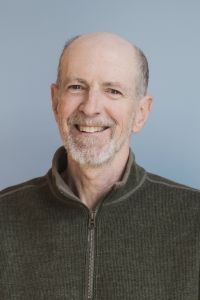
Thomas Jack, Professor Emeritus of Biological Sciences
Jack retired in 2026 after 33 years of teaching and mentoring Dartmouth students. In 2012, he became an inaugural fellow of PULSE, the Partnership for Undergraduate Life Sciences Education, which brings research on how students learn into the science classroom. Three years later he and two colleagues rebuilt Biology 13, Gene Expression and Inheritance, into a flipped course that hands class time over to group problem-solving, a design the course still uses. He chaired the department for 12 years and helped carry the Life Sciences Center from planning to construction.
The Elizabeth Howland Hand–Otis Norton Pierce Award
Awarded to a member of the faculty who, in the opinion of the trustees, is an outstanding teacher of undergraduates
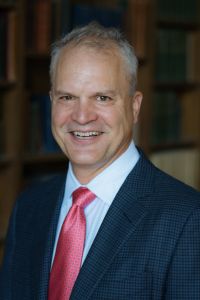
Russell Muirhead, Robert Clements Professor of Democracy and Politics
Muirhead is a political theorist who teaches the foundations of constitutional democracy, and his long-running course on American political thought pulls students from across the College. His teaching crosses fields; he recently co-taught a course on ethics, politics, and law with a colleague in philosophy. He co-founded Dartmouth’s Political Economy Project. His books include Ungoverning and A Lot of People Are Saying, both written with Nancy Rosenblum, along with The Promise of Party in a Polarized Age and Just Work.
The Karen E. Wetterhahn Memorial Award for Distinguished Creative or Scholarly Achievement
Awarded to a newly tenured faculty member with outstanding scholarship
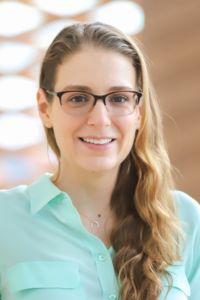
Amanda Amodeo, Associate Professor of Biological Sciences
Amodeo is a developmental biologist who studies how cells in a young embryo keep track of how far along they are. Working with the fruit fly Drosophila, her lab asks how an embryo knows when to stop dividing and start specializing, with a close look at the cell cycle, chromatin, and the histones that act as molecular timers. More recently the lab has turned to how the cells that build an egg coordinate their growth. She draws on imaging, genetics, biochemistry, and mathematical modeling, and she is a member of the Cancer Biology and Therapeutics program at the Dartmouth Cancer Center.
The Frank J. Guarini Award for Extraordinary Contribution to Off-Campus Programs
Awarded to a faculty member who has made significant efforts to advance the mission of Dartmouth’s international and domestic off-campus study programs for undergraduates

Carlos Cortez Minchillo, Associate Professor of Spanish and Portuguese
Cortez Minchillo directs Dartmouth’s Brazil Learning Immersion in São Paulo and Salvador, known as BLISS, an off-campus program run jointly by the Department of Spanish and Portuguese and the Department of Latin American, Latino, and Caribbean Studies. It pairs topic courses taught in English with Portuguese instruction at every level. A scholar of modern Brazilian literature and film, he has won the 2018 Casa de las Américas Prize and Dartmouth’s 2023 Latin and Caribbean Community Advocate Award.
The Dean of the Faculty Award for Outstanding Mentoring and Advising
Awarded to a faculty member in recognition of outstanding contributions to Dartmouth and career distinction
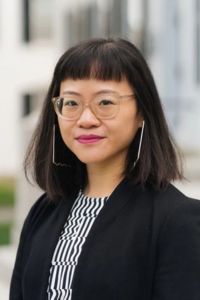
Mingwei Huang, Associate Professor of Women’s, Gender, and Sexuality Studies
Huang advises the Sexual Assault Peer Alliance and Spare Rib, the student intersectional zine, and she has guided senior theses in women’s, gender, and sexuality studies, cognitive science, and geography, as well as Mellon Mays fellows and other undergraduate researchers. Her advisees have earned President’s Scholarships and Leslie Center research awards, and she has mentored students through the Asia/America working group. A scholar of race and migration, she wrote Reconfiguring Racial Capitalism: South Africa in the Chinese Century, an ethnography of Chinese migration and business in Johannesburg.
Dean of the Faculty Award for Exceptional Service
Honors exceptional service that is distinguished by achievements of unique significance to Dartmouth by an Arts and Sciences faculty member

Erich Osterberg, Earth and Planetary Sciences
Osterberg is a climate scientist who reads ice cores to reconstruct past climate change and air pollution. With Feyrer, he co-chaired the Committee on Organization and Policy, and he had co-chaired it the year before as well, when it weighed governance models for the new school. He chairs the Council on Institutional Priorities and the Department of Earth and Planetary Sciences, sits on the Faculty Coordinating Committee and the Irving Faculty Advisory Board, and served on the Arts and Sciences Implementation Committee. Off campus, he chairs the Upper Valley Climate Adaptation Workgroup.
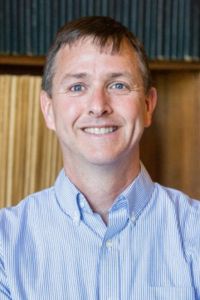
James Feyrer, Professor of Economics
Feyrer is a macroeconomist who studies economic growth and international trade. With Osterberg, he co-chaired the Committee on Organization and Policy in 2025-26 and led a rewrite of the faculty governance charter timed to the launch of the School of Arts and Sciences, and he stays on as co-chair this year. He chairs the Department of Economics and has previously chaired the Council on Institutional Priorities and the Committee on the Faculty. Since 2021 he has been the faculty adviser to Dartmouth’s football team.